Forests fare poorly in outcomes of Rio+20, say CIFOR scientists
By Michelle Kovacevic
RIO DE JANEIRO, Brazil (26 June, 2012)_Forests have been largely ignored or ambiguously mentioned in the Rio+20 outcome document, yet again postponing progress on integrating forests into sustainable development objectives, said CIFOR scientists at the conclusion of the Rio+20 summit last week.
- Norway may boost REDD+ funding to support green growth
- Speaking out on sustainable development: Rio+20 in quotes
- Indonesia seeks “multi-bilateralism” to lift REDD+ off the ground
- Communities are not companies: New approach needed for community managed forests
- Brazil must go “beyond enforcement” to protect Amazon for Green economy
- Cocoa producers in the Amazon want to compete globally, while protecting tropical forests
- Ecosystem-based adaptation most effective in coastal cities, study shows
- Rio+20: New tool helps simulate bioenergy futures in developing countries
- Nepalese community forestry expert: ‘With green forests comes a green economy’
- In gender issues, we need to walk the talk, say leaders and researchers in Rio+20
- Adaptation research needed to fill gaps on forests’ roles beyond local level
- View presentations from Rio
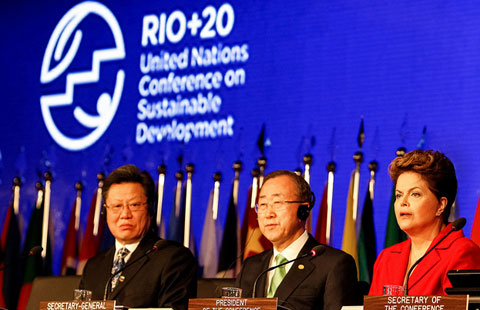
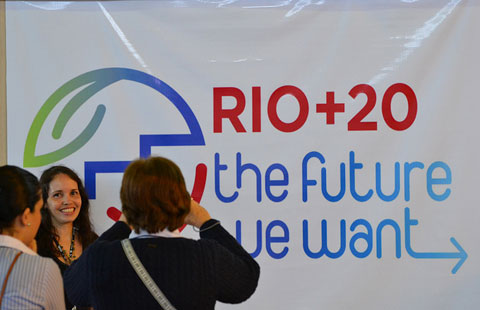
The United Nations Conference on Sustainable Development (UNCSD, or Rio+20) took place in Brazil on 20-22 June 2012 to mark the 20th anniversary of the landmark 1992 United Nations Conference on Environment and Development (UNCED).
Rio+20 focused on two themes: a green economy in the context of sustainable development and poverty eradication, and the institutional framework for sustainable development. Forests, however, were largely excluded from the preparation documents in the lead up to the summit.
The Collaborative Partnership on Forests submitted a statement to the Rio+20 organising committee which outlines a focused action agenda that can deliver the benefits of sustainable development from forests and for forests. To read a copy of the submission, click here.
Forests must remain high on the sustainable development agenda. Forests make important – but underappreciated – contributions toward solving many of the problems that are on the table at these discussions.
 The Rio+20 sustainable development dialogue on forests intended to give a voice to those individuals and organisations who were unable to attend Rio+20, and provided everyone with a platform to share opinions, experiences, research findings, case studies and project results and publications. The dialogue was moderated by a team of scientists from CIFOR, Yale University and the University of Sao Paulo/ESALQ with expertise in the forests of Asia, Africa, the U.S. and Latin America.
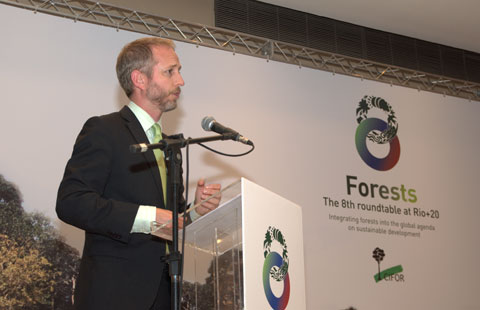
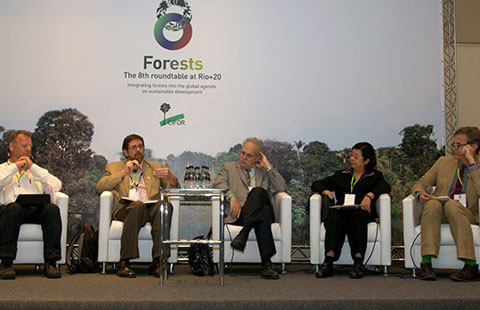
Forests: The 8th roundtable at Rio+20
 To ensure that forests are kept high on the global agenda on sustainable development, CIFOR coordinated one of the most important conferences on forests alongside the Rio+20 summit. Forests: The 8th Roundtable at Rio+20 discussed new research findings – and remaining knowledge gaps — and their policy implications for integrating forests into the solutions to a number of key challenges to progress toward a green economy: Energy, Food and Jobs, Water, and Climate.
Analysing REDD+: challenges and choices

CIFOR’s official onsite side event during Rio+20 discussed how transformational change is required to realize the forest sector’s mitigation potential through avoided deforestation and forest degradation (REDD+). Climate change is a key global challenge and national, sub-national, and local actors are responding in the political, social, and economic spheres. Forests are a key part of the international mitigation agenda. Dense webs of economic interests, political realities, and local needs come to the forefront as countries become “ready for REDD+” and start to develop national REDD+ strategies and policies.
For the past four years, CIFOR and partners have been conducting a Global Comparative Study on REDD+ on policy development and the early stages of implementation. In this side event scientists presented the results of this work that are pertinent to the objectives of the CSD and the development of a green economy.
 CIFOR’s Learning Event at Agriculture and Rural Development Day explored the various shades of grey characterizing the need to increase our understanding of the conditions and information needed to decide in a given context whether sharing, sparing or a mix of both are required to achieve progress in designing sustainable landscapes. Click here for more information.
CGIAR at Agriculture and Rural Development Day: Science for a Food Secure Future
 CGIAR co-organized the 4th Agriculture and Rural Development Day (ARDD) in Rio on 18th June hosted by the Government of Brazil. CGIAR, in collaboration with EMBRAPA, held a session focused on Science for a Food Secure Future. This consisted of an interactive plenary with experts on various themes including Gender, Agrobiodiversity, Household Nutrition Security, Integration through a Landscape Approach, Strategic Partnership, and Securing Long-term Funding) showcasing past, current and future CGIAR and partner research. CGIAR is the world’s largest publicly-funded global research partnership that advances science to reduce global poverty and hunger by addressing issues related to climate change, farming, forestry, environment and natural resources management.
Economic and policy drivers of deforestation of the Brazilian Amazon
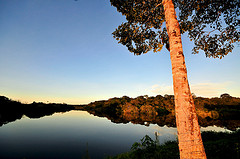 CIFOR co-organised this official side event at Rio+20 which reviewed the recent economic and social drivers of the deforestation in the Brazilian Amazon region, as well as analysed to which extent environmental policies have been effective in decreasing deforestation rates recently. Panellists engaged the audience in a debate focusing on potential ways to enhance the effectiveness of forest conservation policies against the backdrop of social and economic development of the region as well as Brazil’s pledge to achieve the ambitious conservation targets proposed in Copenhagen.
CIFOR’s panels at ISEE 2012 Conference – Ecological Economics and Rio+20

As part of ISEE, CIFOR presented results from an ongoing global comparative study that analyses REDD+ policies and strategies in seven countries in Africa, Latin America, and South East Asia. Differences and similarities in political discourses, policy networks and the institutional context for a REDD+ mechanism were analysed to explain outputs and outcomes of the REDD+ process.
For more information click here.
Linking policy, practice and research for gender-responsive change in forestry

CIFOR’s side event during the Mainstreaming Gender presentations in the Rio pavilion on June 20 aims to promote discussion and the exchange of ideas on concrete ways to address gender inequalities at different governance levels in forestry research and practice, and the risks and opportunities associated with different strategies and choice of partners. The program will begin with three short presentations on experiences linking research in forests to policy makers, practitioners and communities in order to advance gender integration or equity. The first presentation will focus on a project in Uganda and Nicaragua aimed at improving women’s participation; the second, on Adaptive Collaborative Management as a methodology for grassroots change; and the third, on gender and REDD+ based on experience from Vietnam.
For more information click here.
The Landscape: Transformative Action thru Cross-Sectoral Coordination
 The United Nations Forum on Forests (UNFF) organised a Ministerial event on behalf of the Collaborative Partnership on Forests that aimed to bridge the gaps between agriculture, forests, water, land and energy, and between rhetoric and action. The event focused on two sectors: agriculture and forests. Key messages considered included: adopting a landscape approach to sector planning; catalysing cross-sectoral action; effectively engaging the private sector and broadening all sources of finance to advance cross-sectoral cooperation and partnership; getting governance and institutions right; prioritizing agricultural intensification; capturing true values and functions of forests; targeting the most vulnerable populations; restoring degraded landscapes; and achieving significant public and private investment to gain long term benefits.
The 49th Annual Meeting of the Association for Tropical Biology and Conservation
 The 49th Annual Meeting of the Association for Tropical Biology and Conservation was held in Bonito, Mato Grosso do Sul, Brazil, between 18-22 June, 2012.
The ATBC2012 meeting’s theme was “Ecology, Evolution and Sustainable use of Tropical Biodiversity”. The meeting focused on the interface between ecology and evolution, stimulating discussion on ecological questions from an evolutionary standpoint, as well as potential applications of individual studies for the Sustainable use of Tropical biodiversity. Symposia covered a large range of topics, including pollination biology, animal-plant interactions, dispersal ecology, community ecology, biogeography, macroevolution, macroecology, forest fragmentation, and conservation, among others. Click here for more information.