
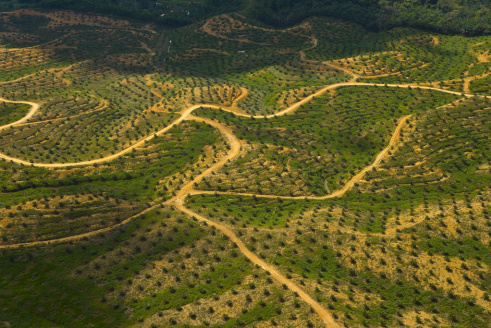
Aerial view of palm oil plantation on deforested land, Sabah, Borneo, Malaysia. WWF Deutschland
BOGOR, Indonesia (1 February 2013)_Governments across Southeast Asia had high hopes for biofuels several years ago: At a time of upwardly spiralling oil and gas prices, renewable energy made from palm oil, sugarcane or jatropha was seen as a way to reduce dependency on fossil fuel imports, improve livelihood opportunities for rural communities and play a part in global efforts to mitigate climate change.
But all of the countries failed to meet their own targets, according to a recent study by the Center for International Forestry Research, partly because — in a region where oil and gas has long been heavily subsidized — consumers had little incentive to switch to a more costly, sustainable alternative.


