


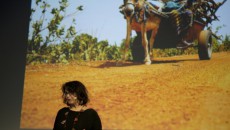
December 6th at the Global Landscapes Forum, Paris: Gender Perspectives on Climate Change
On December 6th, CIFOR – together with a range of partner organizations – is hosting the Gender Perspectives Pavilion at the Global Landscapes Forum in Paris. Throughout the day, we…
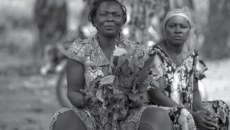
Opinion: A Major Push Forward for Gender and Environment
CIFOR principal scientist Dr. Esther Mwangi is part of the global expert group contributing to UNEP’s Global Gender Environment Outlook (GGEO). The writing process kicked off with a writeshop organized…
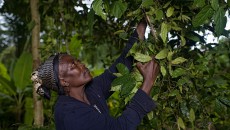
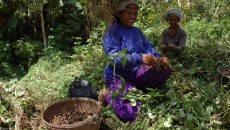
International Women’s Day – What’s new in research?
International Women’s Day on 8 March is an opportunity to look at the gender component of the CGIAR Research Program on Forests Trees and Agroforestry. Here are a few stories…
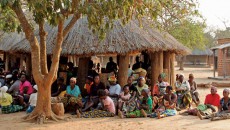
Gender integration in the Nyimba Forest project, Zambia
The project ‘Developing models for measuring, reporting and verification (MRV) for REDD+ in the Miombo socioecological system: utilising opportunities under Zambia’s UN-REDD+ quick-start programme’, known as the Nyimba Forest Project (NFP) is implemented by Centre for International Forestry Research (CIFOR) with support from USAID/Zambia Economic Growth Program. The main focus of the project is to provide support to Zambia’s REDD+ Readiness Programme by conducting additional in-depth studies and assessments on livelihoods, forests resources and providing recommendations for incorporation into the design of the national REDD+ strategy for Zambia.
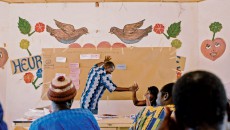
Gender, forest management and climate policy in Burkina Faso
This study is part of ongoing collaboration between the University of Gothenburg and CIFOR to develop indicators or ways to measure impacts from Reducing Emissions from Deforestation and forest Degradation (REDD+) interventions in Burkina Faso. Focus will lie on different ways of analyzing impacts on time use and division of labor for natural resources. The division of labor can provide a useful measure of inequality or changing gender roles.
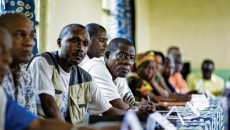
Gender dynamics in consultation and decision-making mechanisms in forest concessions in the Republic of Congo
Despite years of ‘gender mainstreaming’ being a buzzword in the development community, the author of this study argues that we are crucially lacking gender-disaggregated statistics on participation levels in forest management. The context to the study is the implementation of REDD+ in the Congo Basin. For the program to be successful, understanding women’s and men’s needs, roles, uses and knowledge are key, as failing to include women in decision-making could potentially result in gendered impacts that are harmful to women.

How do gender disparities in access to and use of forest assets affect household food and nutrition security? A systematic review protocol
Several studies have shown that women play a vital role in a household’s food and nutritional security while they, relative to men, often have less access and control over productive assets, including land, finance and extension services. Furthermore, the literature indicates that gender inequalities may lead to decreased food production, less diverse consumption patterns, decreased household income, pervasive poverty and food and nutrition insecurity.

Gender, migration and forest governance: Lessons from Nepal
Rural livelihoods in the global South are becoming increasingly diversified and are no longer derived exclusively from farming and land. Seasonal and circular migration of some of the members of the household has become the main livelihood strategy. Household income is sourced from multiple localities, often beyond rural boundaries.