

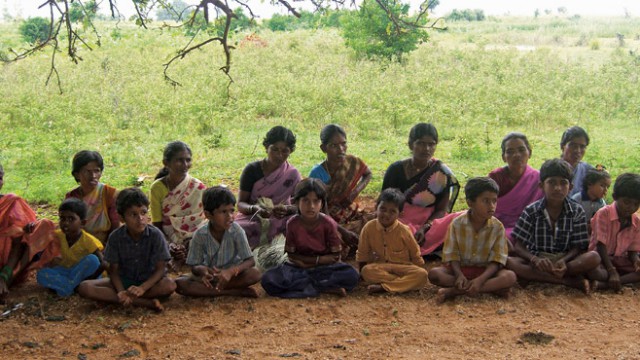
The context of this study is the Forest Rights Act (FRA), passed in 2006 in India (that came into force in 2008), which legitimizes marginalized groups’ access to ancestral forested lands, promotes collective management of forests and provides tribal and other groups with the option of pursuing individual and community-owned land titles through the establishment of claims committees.
Projects
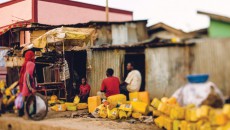
Challenging perceptions about men, women and forest-product use: A global comparative study
This study is a product of the CIFOR-led Poverty and Environment Network (PEN). PEN is a collaborative global project investigating the linkages between forests and livelihoods. It collected and analyzed socioeconomic and environmental household-level data from 8000 households in 24 countries in Africa, Asia and South America.
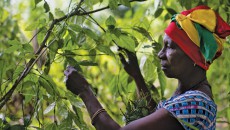
Women’s participation in forest management: A cross-country analysis
The paper examines what determines women’s participation in forestry institutions and the effects of women’s participation on institutional outcomes (particularly on levels of conflict and fairness of rules).
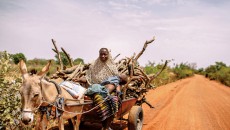
Importance, determinants and gender dimensions of forest income in eastern highlands of Ethiopia: The case of communities around Jelo Afromontane Forest
Rural households across developing countries rely on diversified sources of income, and forest resources play an important role. This study was designed to assess the contribution of forests to the annual income of rural households and to identify its determinants using the case of Jelo Afromontane Forest in eastern Ethiopia.

Gender implications of forest product value chains in the Congo Basin
As part of CIFOR’s research project in West and Central Africa funded by the European Commission and the Common Fund for Commodities, this study analyses value chains of 13 nontimber forest products (NTFPs) from a gender perspective in the Congo Basin (Cameroon, DRC and Gabon).
- 1
- 2