

News – 1 – 2007
Forest dependency and livelihoods of forest-adjacent households in Cambodia
By Dararath Yem, dararath@cdri.forum.org.kh
This study, conducted in 2008, surveyed 600 households in 15 villages in 3 communes in Cambodia: Tumring (Kampong Thom Province), Sangkae Satob (Kampong Speu Province) and Takaen (Kampot Province). All the main forest types (evergreen, semi-evergreen and deciduous) are represented in the study area, which ranges from the north-west of the country to the south-east (i.e. from the north-western lowlands, to northern Cardamom in the transition zone between the Cardamom Mountains and the Tonle Sap Lake lowlands, to the coastal Cardamom area). The variation in rainfall across this area is significant. Forest areas in the communes are under open access and have experienced increasing pressure from land encroachment in recent years. In 2005, some community forests were established in the area (mostly on mountainous land) with technical and financial support from GTZ.
The households’ average total income and average forest income by income quintile are given in Fig. 1. As shown in the figure, poorer households derive a smaller proportion of their income from forests (30%) than do medium- and high-income households (35%). Relatively wealthier households can generate more money from forests because they own the necessary equipment, such as logging tools and oxen or buffaloes for transporting logs and bamboo poles. Furthermore, most of them are involved in forest-related businesses. It is harder for poorer households to make more money from forests because, for example, they do not have animals to transport any products they extract.
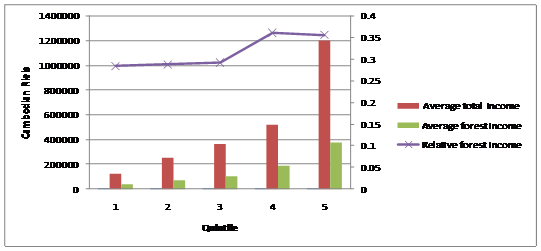
Figure 1: Average and relative forest income by income group
Overall, forest income accounts for 23.71% of total income, making forests the second most important source of income after wage labour (24.3%) (Fig. 2). Many households work for wages in agricultural or forestry activities, as well as generating income from their own farms. Income from crops is the third largest contributor to household income (20.94%), followed by income from livestock (9.12%), business (13.07%) and non-forest environmental income (3.22%). Aquaculture, at 0.14%, makes the smallest contribution.
The most common forest products that people collect – mostly for subsistence – are fuelwood and firewood (34.59%); other important products are wild vegetables, bamboo shoots and logs. Firewood is used for cooking and producing charcoal, and for burning at night to protect cattle from mosquitoes. Wild vegetables are generally used in small amounts as part of the daily diet. Logs and poles are crucial for use in building houses. They also provide sources of income in times of crisis, such as when there is crop failure or household members get sick. Bamboo shoots are another important non-timber forest product; most of the villagers dry and ferment bamboo shoots for use as food during the dry season.
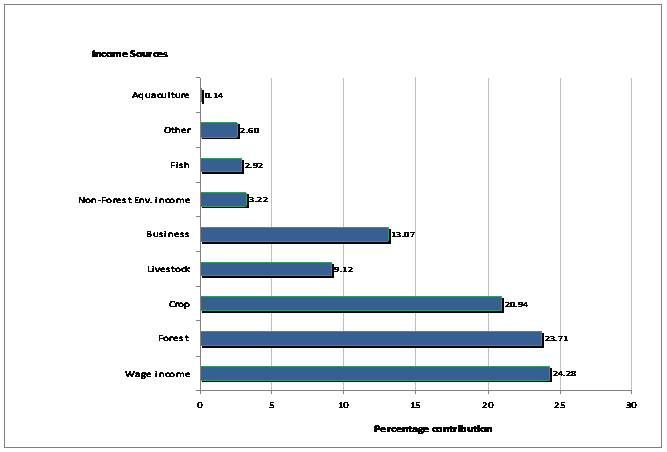
Figure 2: Contribution to income by source
The vast majority of people in Cambodia are poor. As this study reveals, the small amounts of resources they get from forests are very important for their livelihoods.
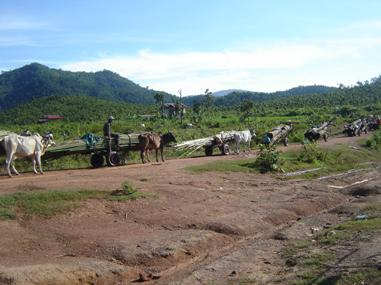
Figure 3: Oxcarts carrying logs and bamboo poles in Takaen Commune, Kampot Province


