

- Updates
- PEN funding secured
- Forest and the millennium development goals
- The experience of 3 PEN studies in 3 countries in South America.
(For example: how should the income of a PEN research assistant marrying a respondent be recorded in the questionnaire?)
1. UPDATES
- 24 PEN data collections are completed (9) or ongoing (15). Three more will start in April in Vietnam, India and Ecuador, while another 3-5 are in the pipeline. A updated list of partners is available at the PEN Web: here
- The first data set has been submitted by Miriam Wyman (Belize), and a handful of others will follow soon.
- Checking, cleaning, merging and aggregating data sets submitted is a huge job. Ramadhani Achdiawan (read: Dhani), who is based at the CIFOR HQ in Bogor, will assume a major responsibility for this task. We welcome him as part of the PEN team.
- Terry Sunderland, who joined CIFOR (Bogor) last year, has also become a key member of CIFOR’s PEN team. His geographical focus is West Africa and South/South East Asia, where he supervises a number of PEN partners.
- PEN has developed a small additional survey for households that miss one survey or drop out permanently; the Attrition and temporary absence survey (ATA). Households missing only one quarterly survey will still be part of the PEN sample. The survey has been sent PEN partners, and will together with the Access database be posted on the Web shortly.
2. PEN funding secured
After a few disappointments, here are some very good financial news: PEN and CIFOR have, in cooperation with the University of East Anglia (UEA), UK, received £ 500 000 (close to USD 1 mill.) from DFID, UK for a project entitled “Tropical forests in poverty alleviation: From household data to global-comparative analysis”. The application first made it to the second round (28 accepted), and then was among six that succeeded on the final lap. The reviews were very favourable, as the following extracts show:
“[the project is] very ambitious but, because of the applicants’ existing research network, it would be a realistic piece of research. … In summary, this proposal is judged to be one of very good quality, with a high potential for impact on poverty reduction. … The project promises results of intellectual significance due to the innovative data collection methods and analysis. …. The research methods proposed are commendable: many replications of small-scale studies co-ordinated to yield insights that should allow reliable generalisations to be inferred. There are few, if any other studies in rural development that I know of that have this ambition.“
I’m particularly pleased to see that the reviewers appreciated the core idea of PEN, as illustrated by the last quote. Special thanks to Sven Wunder and Kate Brown who led the effort from CIFOR and UEA.
The project covers the post-fieldwork phase, thus there is no budget for existing or additional fieldwork. But the funding makes a huge difference, and PEN partners will benefit from a more active PEN project. The budget provides for, inter alia:
- Two workshops and one final international conference each of the three project years. The first workshop will be at the end of 2007/early 2008, focusing on methods of data analysis.
- A full-time statistician to work (together with Dhani and the rest of the PEN team) on the creation and management of the global database, the global data analysis, and providing support to PEN partners.
- Staff time for CIFOR scientists, who will now have more time for supervision and the global data analysis and synthesis.
3. GOOD READING: Forests and the Millennium Development Goals (MDGs)
 The MDGs “form one of the boldest international commitments ever made”, including halving the proportion in extreme poverty by 2015. Can forest play a role in achieving these goals? Yes, and the challenge is “to install environmental investments as the key driver to achieving the MDGs”, argues James Mayers in the latest ETFRN NEWS. Forests are (again) receiving “flavour of the month status”, driven by the inclusion of deforestation in the climate change negotiations. This represents a golden opportunity to bring forest on the poverty and development agenda.
ETRRN NEWS is a newsletter (or rather small journal) published by the European Tropical Forest Research Network (ETFRN – www.etfrn.org). The latest issue focuses on forests and MDGs, and has more than 30 small articles discussing forests in relation to the eight goals and associated targets of the MDGs. The newsletter can be downloaded at: http://www.etfrn.org/ETFRN/newsletter/pdf/etfrnnews4748.pdf
4. PEN PROJECT 1: Amy Duchelle, University of Florida, US: Resolving conflict and promoting certification in Bolivian Brazil nut stands
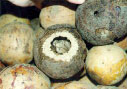 At the end of March, as the rainy season subsides in the Amazon, the Brazil nut harvest is also coming to a close. Brazil nut (Bertholletia excelsa) is the most important non-timber forest product (NTFP) in the tri-national region of Pando (Bolivia), Acre (Brazil) and Madre de Dios (Peru), forming the livelihood base for many rural communities and promoting forest conservation. Thousands of forest dwellers spend their days breaking open large Brazil nut fruits under the 30m tall parent trees. They carry heavy sacks of Brazil nuts on their backs, and pile them on motorcycles, horses, or oxen to take to their homes and storage areas or leave along forest trails where buyers from the city will enter to carry them out. In northern Bolivia, the world’s hub of Brazil nut production, most of the sacks end up in large barges and are sent down the Madre de Dios River to be processed in the city of Riberalta before being sold internationally. The current development of the Interoceanic highway, an extension of the recently paved Brazilian BR-317 into Bolivia and Peru, is likely to change the nature of this formerly remote region by providing regional access to Pacific ports. Within this dynamic context, forest fires, deforestation to pasture, insecure land tenure, and fluctuating prices for Brazil nuts threaten the future of this important NTFP. My comparative research in the three countries explores under what conditions Brazil nut production is most resilient to such large-scale changes.
This research has highlighted that conflict and certification characterize the Brazil nut harvest in northern Bolivia. In Pando, the central role of Brazil nuts in the household economy, coupled with a lack of clear property rights, leads to an extremely high degree of conflict during the harvest season. As soon as Brazil nuts hit the ground in early December, they are collected and carried out of the forest that same day for fear of theft. This is a dangerous practice as the heavy fruits are still falling and relatively inefficient in that individual trees must be revisited several times during the season.
Conversely, the low incidence of conflict over Brazil nuts in Acre leads extractivists to enter the harvest later in the season and collect the nuts all at once. But since Brazil nut fruits are left wetter for longer periods of time on the forest floor, this latter practice has the potentially negative effect of leading to greater infection by aflotoxins, a fungus which can damage the nuts. However, if Brazil nuts are dried after collection, the incidence of infection by aflotoxins decreases remarkably.
A Bolivian cooperative has tapped into the international “organically” certified market for Brazil nuts, whose basic requirement is a healthy (aflotoxin-free) product. Certification of Brazil nuts has proven essential for maintaining the price of this NTFP. As the conventional price for Brazil nuts rose significantly in 2005, but dropped during the 2006 and 2007 harvest seasons, Bolivian collectors selling “organic” Brazil nuts were able to maintain a high and stable price for their product. The Bolivian cooperative is addressing both certification and conflict: In addition to helping collectors build suitable storage areas for drying their Brazil nuts, they are also replicating a CIFOR method in mapping Brazil nut stands with communities in attempt to clarify traditional use rights and reduce conflict.
Returning preliminary results throughout the PEN process has been one of the most satisfying parts of fieldwork and an excellent way to show people products of their participation. Taking advantage of the PEN quarterly visits to conduct workshops with adults and children, present maps and highlight preliminary results have been elemental in building trust with the communities and making participating families feel as if their extensive time with us is worth something. Pushing myself to have basic results ready along the way has also forced me to reflect on the findings. In beginning our fourth round of visits in March, my enumerators and I created personalized certificates of participation, which are presented to each family in the final community meeting. This simple gesture has turned out to be a great way to recognize the families and thank them for sticking with us through the process. A few families have already framed their certificates and have them hanging in their homes!
An idea for other PEN partners?
5. PEN PROJECT 2: Angelica Almeyda, University of Stanford, US: The Political Ecology of Land Conversion in the Tri-National Border of Southwest Amazon
The overall question in my study is: What is the role of development policies as primary forces (“drivers”) that influence land use and land cover change in the tri-national border area of Peru-Brazil-Bolivia, and how can land use differences between countries (if any) be explained using a political ecology framework? I will answer this question by analyzing differences in land use and land cover change among 315 households in the MAP region.
While I have to wait with firm conclusions until the data are collected and analyzed, some observations on land tenure have been revealing. The land tenure system seems to play an important role in land use decisions in the MAP region. In Pando (Bolivia) land is held communally and on average each family has use rights to over 500 ha. This is in contrast with Madre de Dios (Peru) where land is held privately and each family has rights over an average of 50 ha. Acre (Brazil) has an interesting mix of both systems with the Extractive Reserve model being more similar to the Pando land tenure system and the private land holdings being more similar to the Madre de Dios. My initial appreciation is that in cases with a strong community organization and use rights to large tracts of forest, like in Pando and Acre, extractive activities are favored. Within small private landholdings agriculture and cattle ranching tend to be the favored activities. Land size determines the access to the amount of resources while the de jure status determines the access to private loans.
I am looking forward to analyze how road construction and paving impact these general trends on land use. One observation is that road paving by itself, at least in Madre de Dios, does not seem to provide any major benefits to the households I am working with. Paving is on its way and although is an expensive process very little of the money spent reaches the communities: much of the labor, construction materials and food is brought from outside. Road construction has also brought in a number of bars to the area and prostitution is now widespread, changing the face of the towns along the road.
I started fieldwork in July 2006 and the actual survey in September. My sample includes three countries, luckily I am collaborating with Amy Duchelle and we are sharing a PEN sample in Acre, with Amy working within the Extractive Reserve and me on the privately owned properties. I work directly with 24 villages. Data coding and entering – which I’m currently working on – has revealed missing data. I am therefore going back to the field with my old questionnaires, so I can collect the missing data while doing the next round of the survey.
Working in the three sides of the MAP region is both a terrific and a terrifying experience. Especially challenging was to find reliable field assistance, to reach and leave the villages during the rainy season, and for security reasons to always have a reliable strong male in the team. These difficulties led me to rely on family support to make my research possible, thus I have worked with different members of my family during every visit to the MAP region.
6. PEN PROJECT 3: Patricia Uberhuaga, Copenhagen University, Denmark: Forests, Communities and Poverty in the Bolivian Tropical Rainforests
The overall objective of my PhD project is to better understand the role of community forestry in poverty reduction in lowland rainforests in Bolivia. I have collected data from six communities of the Tropics of Cochabamba. I selected communities based on differences in the level of forest use, participation on Community Forest Management Plans (CFMP), and association to UNAFOR (Union of Forest Associations).
One field observation that stands out is the marked differences in income and forest use across ethnic groups. The mestizo colonists used the forest mainly for accumulating money and invest in other activities. When they arrive to the forest area they use their labour mainly for daily wage. It takes some years to buy/get forestland for agricultural crops, basically coca leaves. Later, if there are still some natural forests left, they harvest and sell timber. Once they have accumulated money they buy more forestland, buy a house close to the city, get a market place for business, or buy a vehicle for public transport. Arguably, the forest helps these people to move out of poverty.
Local-indigenous people, on the other hand, depends more on forests, especially NTFP but also timber. They generate their income from small-scale cropping and livestock activities. The diversification of activities included wage labour, and they invest heavily in their children’s education. But, they want to live in the same place all the time. Sometimes relatively high income coexists with poor living conditions and other welfare indicators, such as malnutrition, ill health, limited or no education, and poor housing.
Initiating the data collection was a long and challenging process. A long preparatory process of negotiation at regional, local and communal level was needed in order to get the required permissions. Households were selected randomly from an official list of households, but 40 % did not accept to be interviewed, were not at home or not available, or did not live in the community anymore. They had to be replaced. In the end we started with 164 households, but 46 dropped out before the PEN surveys were completed in January 2007 due to households’ problems with the type of questions included in the PEN survey and security issues. Almost all communities have some distrusts towards outsiders, which must be seen against their history of “alternative development” and programmes of “coca leaves eradication”.
An important issue at the end of fieldwork was the questions of A2 household survey related to “welfare perceptions and social capital”. Questions like “All things considered, how satisfied are you with your life over the past 12 months?” provoked long discussions, histories, and even tears. But such questions allowed us to dig deeper into their livelihood strategies and forest use.
Fieldwork never goes as planned. One of my found memories is when one member of my research team married a community leader and PEN respondent she met during fieldwork. I became a godmother and we had a big party in the community. And, after the wedding a major question was if we had to include her income in the last quarterly survey of that household!
This is yet another example of how the research project itself can affect the research results!
Saludos,
Arild Angelsen
PEN Coordinator
PS: The added household income should be included.


